You do not need the right career picked out before graduation day. You need a way to test, and ninety days is enough to test three directions.
This is that plan, broken down by week. Do as much of it as you can; nobody is grading you.
Why does the final year feel worse than the years before it?
Because for four years, every term somebody laid the work out for you. Now nobody does, and the question changes from "which subject do I take" to "what do I live on".
There is a second thing too: plenty of information, very little real experience. You have read ten articles about marketing and never sat through one real campaign. People are very bad at choosing things they have never tried.
The way out is not more reading. It is trying a few small things and watching your own reaction.
The 90-day plan, week by week
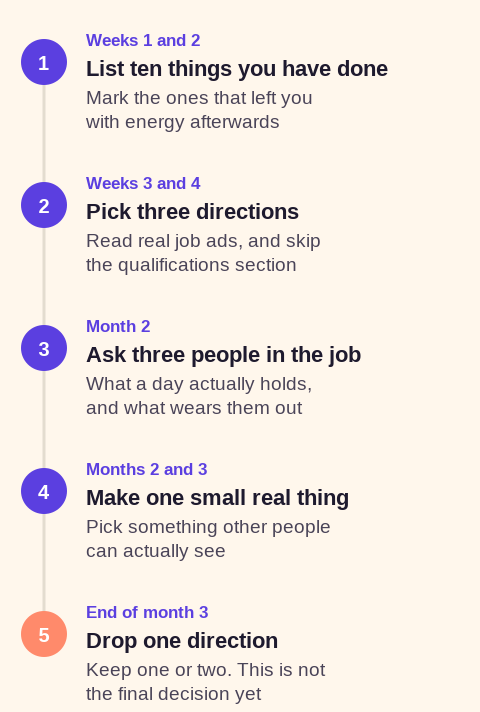
- Weeks 1 and 2: write down ten things you have done. Course projects, clubs, part-time work, things you taught yourself. Then mark the ones you finished with energy left over. The list is usually longer than you expect, and it is also the raw material for your CV later.
- Weeks 3 and 4: pick three directions you are curious about. Read the day-to-day description in real job ads, not career-guide articles. Skip the qualifications section and read only the part about daily work. You are looking at what you want to do all day.
- Month 2: have a fifteen-minute conversation with three people doing those three jobs. Ask exactly two questions: what does a day actually hold, and what is the most tiring part. People usually answer honestly if you ask short and ask sincerely.
- Months 2 and 3: make one small real thing. A personal project, a short internship, or helping a small outfit rebuild something. Pick work where someone else sees the result, because real feedback is the valuable part. If you are aiming at an internship, how to spot one worth taking keeps you from losing three months to the photocopier.
- End of month 3: sit down for one session and write what you liked and what you dreaded. Drop one direction, keep one or two. This is not the final decision, only a choice about where to go deeper.
Where do you find people to ask?
Step three is the one most people skip, because they do not know who to ask. The easiest places:
- People a year or two ahead of you from the same course, already working. They are closest to you and most likely to say yes.
- Your university alumni group, or a field-specific group on social media.
- Someone who writes about that job in a way that strikes you as sensible. Send a short message, say clearly that you are a final-year student and you are asking for fifteen minutes.
When you message, say up front what you want to ask, and be clear that you are asking for fifteen minutes and not for a job. Out of ten messages, three or four usually reply. That ratio is normal; do not read silence as proof you did something wrong.
Can you run this plan and apply for jobs at the same time?
Yes, and you should. The two do not get in each other's way.
While the ninety days run, keep sending applications. Every application is one more reading on how the market responds to you. If your CV is thin because you have never held a job, how to find CV material in what you have already done works directly off the list of ten from step one.
Landing a job before the ninety days are up is a good outcome. This plan is not a precondition for starting work; it is only a way to know where you are heading.
Things you do not need to do
- You do not need an answer for the rest of your life. A direction for the next year or two is enough.
- Your degree does not oblige you to work in the field it names.
- You do not need to wait for graduation to start testing. The final term is usually the freest stretch of time you will have for years.
- Friends moving faster does not mean you are behind. Some of them chose early because someone chose for them.
If you have thirty days, not ninety
Still workable, just trimmed:
- Week 1: list ten things you have done, pick two directions instead of three.
- Week 2: talk to two people doing those two jobs.
- Weeks 3 and 4: make one small thing for whichever direction you lean towards, and keep applying in parallel.
The short version gives you less data, but it still beats another thirty days of reading.
Being lost is not a sign something is wrong with you
Most people are still adjusting direction years into working life. The difference is that they have real data to adjust with, and you are on your way to collect yours.
So this week, just do step one. One page, ten lines, one hour.